
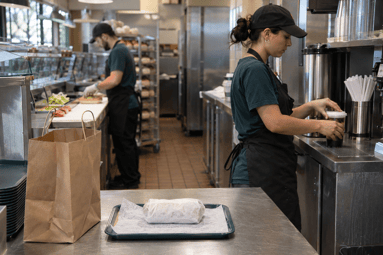
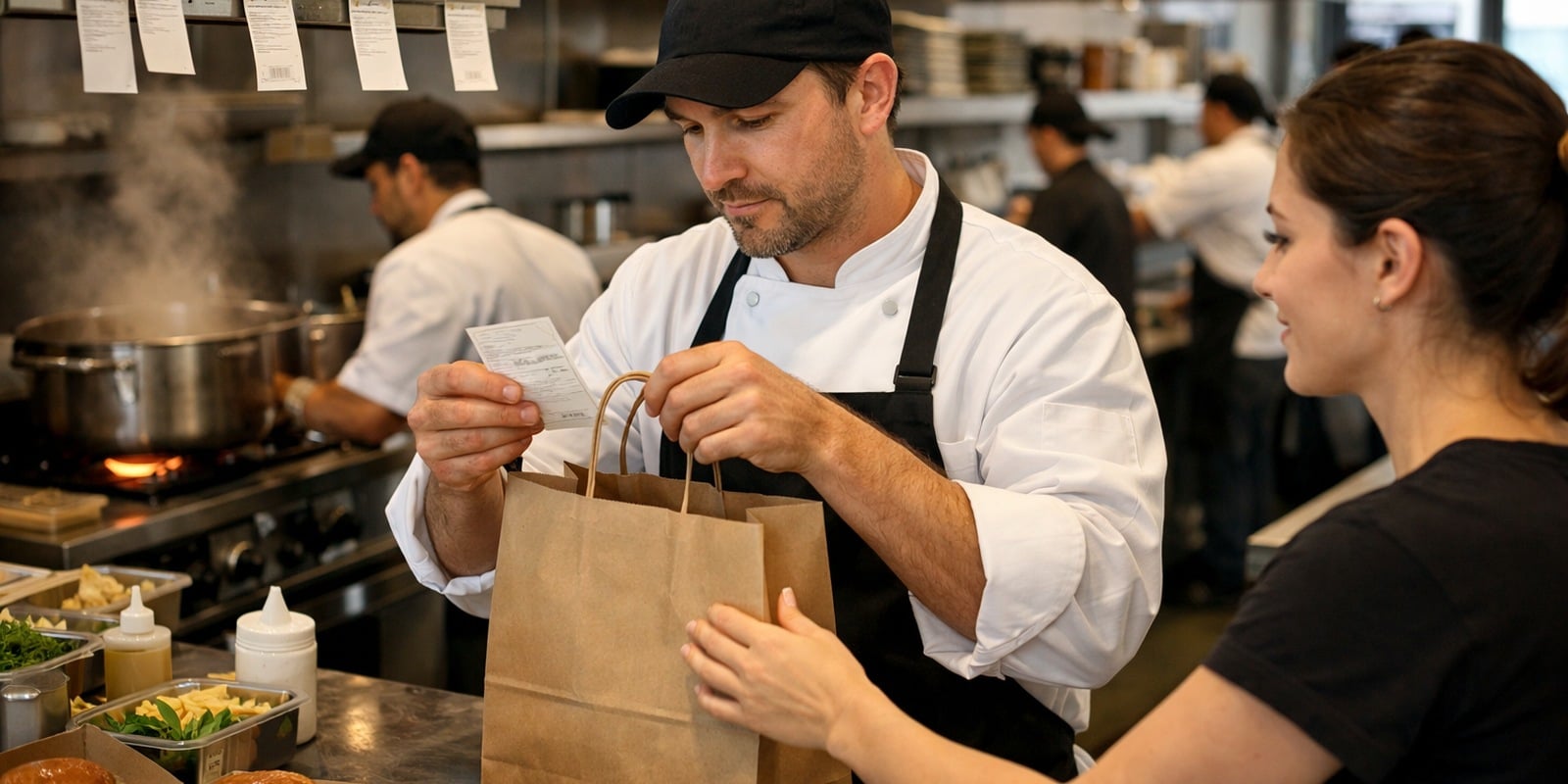
You’re in the middle of the lunch rush. A sandwich is wrapped and waiting at the counter, but the drink that belongs with it is still being prepared. The person packing the order steps away to find it. Another order arrives in the space they just cleared. You can see the queue growing. What would you change first?
You could ask everyone to move faster. Before you do, follow that sandwich. How much of its journey involved someone preparing food, and how much involved waiting for the next step? Our view is that improving restaurant speed of service should make the work easier to do correctly. Finding the wait gives you somewhere practical to start.
What are you asking the team to make faster?
Take the order at the counter. If your timer stops when the kitchen closes the ticket, it may stop before the drink reaches the bag. The guest is still waiting, even though the recorded work looks finished. Before setting a target for speed of service, agree on the moment you want to improve.
For this review, consider the time from accepting an order to handing the complete order to the guest or courier. Keep kitchen preparation time visible within that interval. Your POS and kitchen display system may already provide useful timestamps. Confirm what each one means in that restaurant, then use the same start and finish throughout the test. Moving the finish line makes a comparison hard to trust.
Give accuracy the same attention. Track complete and correct orders as a share of the orders you review, using a consistent definition. Record corrections caught before handoff separately from errors that reach the guest. If someone spots the missing drink and retrieves it, the customer may leave with the right order. The team still did extra work. You need to see that work when deciding whether speed of service improved.
Follow the order that keeps waiting
Choose one service period and follow a manageable sample of orders through it. Note when preparation begins and when the required components reach assembly. Continue through verification to handoff. Record enough about each order to make the comparison useful. A single sandwich and a customized family meal ask different things of the kitchen.
When an order pauses, stay with the question of what it needs next. The sandwich may be waiting because the drink has not been started. Or the drink may be ready at a station the packer cannot easily see. Those situations can look similar from the pickup counter. They call for different changes.
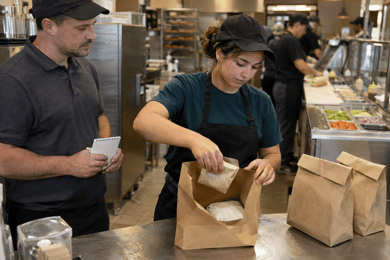
These timing gaps between preparation and assembly are worth discussing with the crew while the details are fresh. Ask the packer what they were waiting for and how they knew it was ready. Their answer may reveal a workaround you would never find in the ticket report. Then observe another order to see whether the same pattern returns.
Ask the people who work around the delay
A manager looking at a crowded counter might reasonably put another person there. First, ask what that person would do. If every bag is waiting for something from the beverage station, more packing capacity may leave the original delay untouched. The person already at expo may be able to explain exactly where the work gets stuck.
Look at what makes the workaround necessary. Does someone leave the station repeatedly for packaging? Is responsibility for bringing drinks to expo unclear during lunch? Walk the route with the team before changing roles. The aim is to remove a recurring obstacle they have to work around while serving the next guest.
Keep verification in that conversation. Quality checks can become unreliable during peak service when they depend on someone remembering an extra step under pressure. Ask what would make the check easier to complete where the work happens. A shorter walk or clearer place for unfinished orders may be worth testing before asking the crew to compress the check itself.
Give the next shift one change to try
Suppose the team decides who will bring completed drinks to expo during lunch. Make that one change clear before service starts. The packer should know what to expect, and the person taking responsibility should understand when the drink needs to arrive. Keep the rest of the workflow steady enough to judge what changed.
Watch the next comparable lunch period. Did orders spend less time waiting for drinks? Did the person handling drinks now fall behind on other work? Check the unusually long orders as well as the typical ones. An improved average can hide the same difficult orders still sitting at the counter.
Review accuracy for those orders using the original method. If speed of service improves while more orders need correcting, keep investigating. Ask the crew whether the change made their work easier or simply gave someone another interruption to manage. Their experience helps explain the numbers; it does not replace checking what happened.
That is how a focused store-level response becomes useful. Try it across comparable service periods before deciding it should stay. A quiet afternoon cannot tell you whether the adjustment will hold during lunch. If it works locally, check the conditions at another restaurant before asking its team to adopt it.
Make the pickup promise fit the kitchen workflow
For delivery orders, there is another person working to a clock: the courier. A courier waiting at the counter does not, by itself, tell you that preparation got slower. Compare their arrival with the time the complete order was actually ready and the estimate the restaurant provided.
DoorDash explains that item-level preparation times inform readiness estimates and courier assignment. Review those settings alongside the kitchen’s actual work. If the promise assumes a simple order while the crew is preparing something more involved, investigate the estimate as well as the preparation process.
The same care applies across locations. A change that helps one restaurant may need adapting where the beverage station is farther from assembly. Give the next manager the reason the change worked, along with the result. That gives them something they can assess against their own team’s working conditions.
Where Plainsight helps the person making the decision
This is the job we see for an operational visibility layer. A manager needs to understand where the order waited and what was happening around it. The people building the system and the people running the restaurant should agree on which moments need to be visible and what decision those observations will support.
Plainsight connects system expectations with physical execution so restaurant leaders can investigate that gap. Start with the sandwich waiting for its drink and define what you need to observe. Check those observations with the crew. Their knowledge of the kitchen helps you understand what the evidence means and choose a change worth trying next shift.
Start beside the counter
Before setting the next target for speed of service, follow one order with the person responsible for getting it out. Find the wait that keeps interrupting their work. Test a change, then come back during the same pressure and see what happened. The goal is a complete, correct order reaching the guest sooner, with a workflow the team can reliably carry out.
Computer Vision in Foodservice: Making Physical Operations Visible
Beyond Food and Labor: 7 Operational Leaks That Drain Margin
No Comments Yet
Let us know what you think