
Peak periods expose quality problems that can stay hidden during slower shifts. The recipes have not changed. The standards are posted. The team knows what good looks like. Yet consistency slips when the line fills, stations fall out of sync, and orders move through more hands.
Across multiple locations, those breakdowns affect waste, remakes, throughput, guest trust, and operational efficiency. They are rarely a simple employee problem. They usually begin in a workflow that relies on memory, informal ownership, or manual checks that become unreliable under load.
Restaurant quality control works during the rush only when its most important checks are built into the way work moves. These five failure points show where to start.
Reason 1: Memory-based checks fail under load 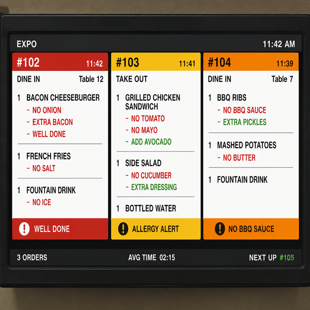
Many brands rely on “remember to” controls: verify the portion, check the modifier, watch the hold time, label the bag, or inspect the finished plate. Those actions may happen consistently when a station has slack. When tickets stack, anything not built into the station path competes with the next order.
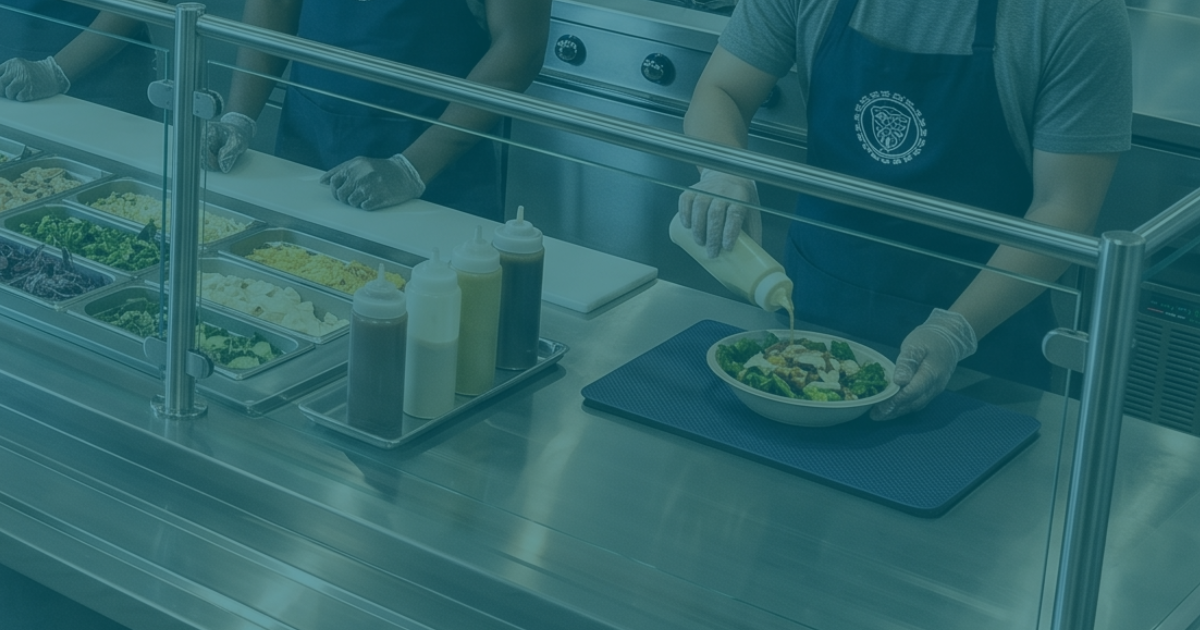
A bowl line, for example, may begin building by pattern instead of checking each ticket. Portions drift and modifiers get missed even though the team knows the standard. Reduce that risk by placing portion tools, visual cues, and one must-pass check at the point of work.
Reason 2: Speed starts competing with consistency
Speed targets are necessary. Problems begin when speed is measured and reinforced more consistently than quality. Teams clear tickets, avoid re-fires, and keep the line moving because those outcomes are immediately visible.
At a sandwich concept, a toaster bottleneck may lead the line to pre-toast and stack buns. Ticket times improve while texture and temperature drift. Pair speed targets with clear quality boundaries, an approved remake lane, and capacity changes at known constraints. The goal is to protect throughput without rewarding shortcuts.
Reason 3: Stations optimize their own work instead of the full order
Preparation, cooking, assembly, bagging, and handoff can each appear productive while the full order still fails. One station gets ahead, another falls behind, and completed components wait too long or move forward before the rest of the order is ready.
Good workflow optimization focuses on dependencies between stations, not just the output of each station. Define what must be true before an order can be staged, sealed, or handed off. Protect the sequence for products that do not tolerate waiting, and make incomplete work visibly different from verified work.
Reason 4: Ownership disappears at handoffs
Quality problems cluster at transitions: grill to assembly, assembly to expo, expo to bagging, and runner to pickup. During slower periods, informal ownership can work because the same people see an order from start to finish. During a rush, roles split and each station assumes someone else completed the final check.
Assign one final owner for each order and write simple last-touch rules: who verifies what, in what order, before the order moves. When volume requires separate expo, bagging, and runner roles, make the verification responsibility explicit rather than leaving it between positions.
Reason 5: Managers see the result, not the failure point
Managers often see the remake, complaint, or crowded pass without seeing the skipped check or late handoff that caused it. Peak-hour restaurant operations pull managers into expediting, staffing gaps, and guest recovery, turning observation into occasional sampling.
Traditional systems may record the order, refund, or ticket time without explaining the physical breakdown. That is the gap explored in what POS data misses about order fulfillment. Why restaurant errors disappear before reaching the dashboard also explains why clean reporting is not always proof of clean execution.
Move from broad reminders to traceable coaching. “Verification was skipped before bag sealing” gives a manager a process to fix. “We need better quality” does not.
How to build restaurant quality control for the rush
The strongest controls are few, clear, and difficult to bypass. They should work during the busiest service period and be comparable across locations, shifts, stations, and ordering channels.
Choose the critical control points
Inspect where catching a defect is cheapest and most reliable: before ingredients are combined, before a bag is sealed, or before an order is handed off. Avoid adding checks to every step.
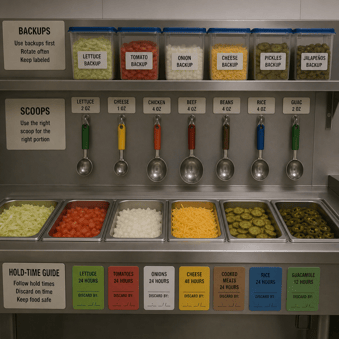
- Prep: Confirm portion tools, labeled backups, and hold-time standards before service.
- Assembly: Define one must-be-true check for each menu family.
- Verification: Check presentation, packaging, key modifiers, and safety-critical items.
- Handoff: Do not mark an order ready until it is verified and staged correctly.
Make status and ownership visible
Separate awaiting-verification work from verified work with a shelf, lane, label, or clear digital status. Document ownership by daypart and channel so employees do not have to interpret responsibility during the rush.
Compare performance in context
Review quality by location, shift, station, and ordering channel. A delivery-heavy urban location should not be evaluated exactly like a suburban drive-thru. For the broader operating model, connect these practices to how to improve restaurant operations across multiple locations.
Test changes during real peak conditions
A control that works during an audit may fail when the station is constrained. Test changes during an actual rush, measure quality and flow together, and adjust before rolling them out across the network.
Coach from specific examples
Show teams the moment the process broke down and the behavior that must change. Specific examples make restaurant standard operating procedures easier to apply than another general reminder to focus on quality.
Where operational visibility fits
Even strong standards drift by hour, shift, and location when workflows bend under peak load. Plainsight makes the physical moments behind preparation, assembly, fulfillment, and handoff visible so leaders can identify operational drift, compare patterns, and give managers a specific problem to investigate.
Operational visibility does not replace quality standards, training, or management. It connects reported outcomes with what happened in the workflow, helping teams redesign the process while protecting both quality and flow.
Build quality into the rush
Restaurant quality control becomes reliable when verification is part of the workflow rather than an extra task. Define a few critical control points, assign last-touch ownership, make incomplete work visible, and test the process under real peak conditions.
Start by observing one high-volume service period from preparation through handoff. Identify the first quality check that becomes inconsistent and redesign that control before adding more inspection. If your current systems show that quality slipped but not where the workflow began to drift, explore how Plainsight makes peak-hour execution visible across locations.
How to Improve Restaurant Operations at Multiple Locations: 7 Steps
Beyond Food and Labor: 7 Operational Leaks That Drain Margin
No Comments Yet
Let us know what you think